Which market and local ecosystem should the company evaluate first?
About Startup Runway
We build global ecosystems for scaleup expansion.
Startup Runway connects international scaleups with the cities, corporations, universities, research institutions, and local operating relationships that shape a credible new-market decision.
From Richardson, Texas, we develop market-entry pathways that connect global ambition with local execution.
Why this model exists
Scaleups do not need another startup program. They need a market they can understand.
A growth-stage company entering a new country faces a different question from an early-stage founder. The product may already exist. The leadership challenge is to understand whether the next market has the right commercial, institutional, and operating conditions for the company’s next commitment.
Startup Runway was built to turn international ambition into a clearer market decision and a more informed next step.
What must be true before the company commits people, capital, or a local operating base?
Which institutional relationships are relevant to the company’s sector and stated decision?
What should be validated before the company expands the commitment?
The ecosystem is the product
Market entry is not one service. It is a set of systems that must work together.
A serious expansion decision sits across market demand, corporate relationships, city context, research capability, public-sector conditions, and local operating readiness.
Startup Runway brings the relevant market, institutional, and operating context into one focused pathway.
MarketCorporationsCitiesUniversitiesPublic sectorOperating partnersScaleup
decision
decision
Market ecosystem
Customers, channels, sector context, competitors, and the conditions that shape commercial relevance.
Corporate ecosystem
Enterprise buyers, strategic partners, suppliers, innovation teams, and industry relationships relevant to a defined opportunity.
City ecosystem
Economic-development context, infrastructure, local institutions, and the operating conditions around a location decision.
University and research ecosystem
Research capability, commercialization pathways, laboratories, talent, faculty, intellectual property, and industry collaboration.
Public-sector ecosystem
Government context, regulation, standards, procurement conditions, and the appropriate public stakeholders for a defined question.
Operating ecosystem
Local capability across talent, sales, legal, finance, logistics, location, and execution requirements.
Startup Runway works with scaleups. Startup Runway builds ecosystems with institutions.
Four sides of the global growth ecosystem
A scaleup’s market decision becomes stronger when the right institutions can work around it.
International scaleups
Growth-stage companies preparing for U.S. market entry, international commercialization, research collaboration, or a local operating presence.
Cities and economic-development organizations
Institutions seeking a disciplined way to connect international business-attraction activity with qualified companies and local operating context.
Corporations
Enterprises exploring relevant technologies, partners, suppliers, and global capabilities around a defined operating or innovation question.
Universities and research institutions
Institutions connecting research, talent, commercialization, founder pathways, intellectual property, and industry relationships with international opportunity.
Scaleups are the core company audience.
Cities, corporations, universities, and research institutions are the ecosystem partners that make a market pathway more complete.
Built in Richardson. Designed for global corridors.
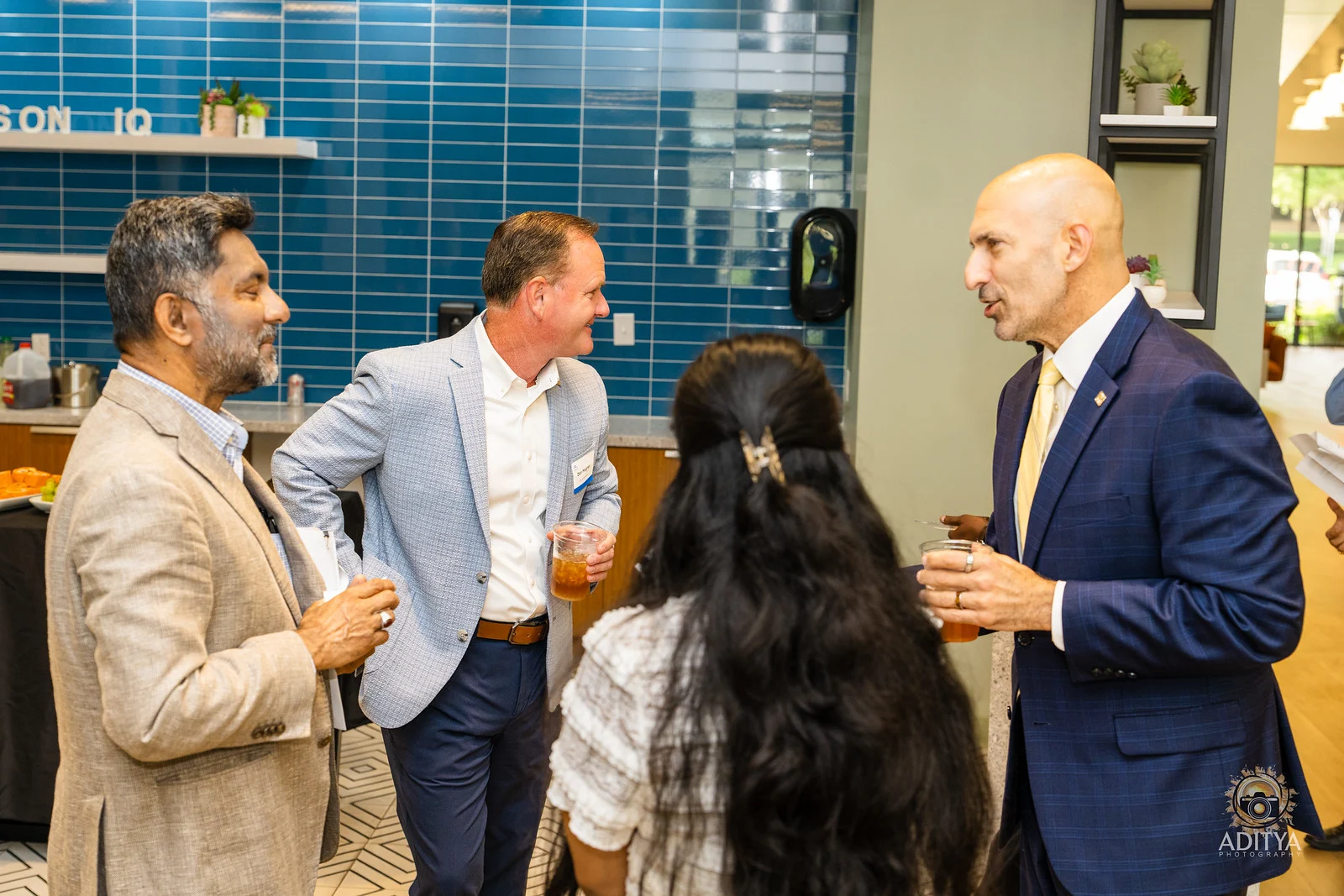
Richardson is Startup Runway’s first U.S. operating ecosystem.
Richardson is a real market where city leadership, corporate presence, university capability, and the broader North Texas economy can converge around scaleup expansion decisions.
The Richardson relationship is not presented as a badge. It is the first working example of the Startup Runway model: a defined place, relevant institutions, and a market environment that brings global expansion questions into local focus.
Explore Why RichardsonGlobal relationships. Local execution.
We build corridors, not generic international networks.
A corridor connects a specific international market with a defined U.S. ecosystem. It becomes useful when a scaleup can see the local questions, institutions, and operating conditions that matter to its next decision.
A global relationship becomes valuable only when it can support a specific local decision.
The platform so far
From one U.S. operating ecosystem toward connected global corridors.
The model has developed through public institutional relationships, cross-border fieldwork, university pathways, corridor guides, and decision-led operating records.
How we think
Five principles for global scaleup expansion.
Traction before expansion
A company should have meaningful capability before making a serious international market commitment.
Markets before offices
A company should understand the market and local operating conditions before making a heavy location commitment.
Ecosystems before isolated introductions
One contact is rarely enough; the surrounding institutional context is what makes a relationship useful.
Decisions before activity
A meeting, mission, introduction, or program matters when it advances an accountable decision.
Global relationships, local execution
International opportunity becomes useful when it connects to the capability required to operate locally.
The people and functions behind the platform
Startup Runway is institution-led and people-powered.
The platform is built around the practical work of market-entry operations, international business development, research and university partnerships, corporate engagement, and city or economic-development relationships.
01Market-entry operations02International business development03Research and university partnerships04Corporate engagement05City and economic-development partnerships

Founder & CEO
Mahesh Nandyala
Mahesh shapes Startup Runway’s operating philosophy, institutional relationships, and global expansion pathways. His professional record lives on a dedicated Leadership page, separate from the institution’s public identity.
Where Startup Runway is going
Building infrastructure for global scaleup expansion.
Startup Runway is building connected ecosystems where international scaleups can evaluate new markets with greater clarity and enter them with stronger local context.
The next market should not start from zero.
Discuss Expansion