Teams with a defined buyer, sector, or operating question—not a generic interest in expansion.
Global corridors
Global market guide
Expand an Indian company into the U.S. market.
Turn proven traction in India into a defined U.S. GTM decision—before committing a team, entity, or operating base.
Company-origin corridor
IndiaUnited States
Country-to-country market route · India → United States
Route anchor · India → United States routeExecutive summary
The market decision, before the operating commitment.
Start with the leadership questions that determine whether this route merits deeper work: the buyer, sector thesis, local operating constraints, and proof that would justify a commitment.
The right time to assess the corridor is when a company can name the U.S. buyer, commercial objective, accountable owner, and first proof point—not simply when it is ready to open an office.
The decision is whether a company can translate its current offering, buyer hypothesis, pricing, proof, and operating model into a credible U.S. market path.
Different ICP, pricing, and buyer expectations
Frame the U.S. buyer, sector, decision owner, and proof point
Test the localization, access, and first-proof assumptions with qualified advisers and relevant relationships
Why this market
A U.S. expansion asks for commercial proof, not a geographic announcement.
The decision is whether a company can translate its current offering, buyer hypothesis, pricing, proof, and operating model into a credible U.S. market path.
Start with the current commercial proposition, accountable owner, and the information needed to test the destination-market hypothesis.
The right time to assess the corridor is when a company can name the U.S. buyer, commercial objective, accountable owner, and first proof point—not simply when it is ready to open an office.
Source links and route context appear below.
Market context
Destination context for a considered market-entry decision.
Dated indicators that help frame the destination question. Open the original source for its full methodology and context.
GDP (current US$)
A high-level baseline for U.S. destination economic scale before the company tests a specific buyer and sector thesis.
Population, total
A national population baseline that frames the scale of the destination, not a customer estimate.
U.S. Census-basis annual general imports of goods, current US$.
A public goods-trade context point for India → United States; it is not a measure of the company’s commercial opportunity.
Leadership preparation
The friction to anticipate and a first-90-day decision path.
Start with the commercial and operating conditions that change the plan.
Leadership attentionWhat needs to be resolved first.
Different ICP, pricing, and buyer expectations
Longer enterprise evaluation and procurement cycles
Need for local proof, credible references, and accountable market ownership
Frame the U.S. buyer, sector, decision owner, and proof point
Test the localization, access, and first-proof assumptions with qualified advisers and relevant relationships
Decide whether a defined pilot, operating base, or close condition is warranted
Planning tools
Keep the decision moving with the right tool.
CORRIDOR PLAYBOOK · FIRST-90-DAY ACTION PLAN
Get the market-entry playbook
Get the working report after you have seen the public value. It connects your planning signal, a first-90-day sequence, priority operating questions, and selected market context.
- First-90-day action plan
- Buyer-validation questions
- Operating-context prompts
- Market-specific decision milestones
Direct answers
Questions leadership teams ask before expanding.
Practical market-expansion context for the route, with company-specific requirements carried into the right private and professional conversations.
01How should a India company approach U.S. market expansion?+
Start with a defined buyer, sector thesis, accountable decision owner, and first proof condition. This India → United States guide organizes the market context and practical questions leadership can use before committing a team, entity, or operating base.
02How long does it take a India company to open a U.S. office in Texas?+
There is no responsible universal timeline. Entity formation, sector requirements, contracts, hiring, buyer readiness, and local operating choices vary by company. Leadership should first define the buyer, commercial proof, accountable owner, and operating conditions that would justify a U.S. commitment.
03Is Richardson, Texas relevant to an international company’s U.S. market expansion?+
Richardson can be relevant when its enterprise, university, City, talent, and North Texas ecosystem context matches the company’s stated market question. Public City of Richardson, Richardson IQ, and university records describe local context; each company still needs to test buyer fit and operating requirements for its own decision.
04What should a India company validate in the first 90 days of a U.S. expansion decision?+
Validate the buyer and commercial question, local access and operating assumptions, and the proof or close condition that would justify the next commitment. The goal is a defined leadership decision—not activity for its own sake.
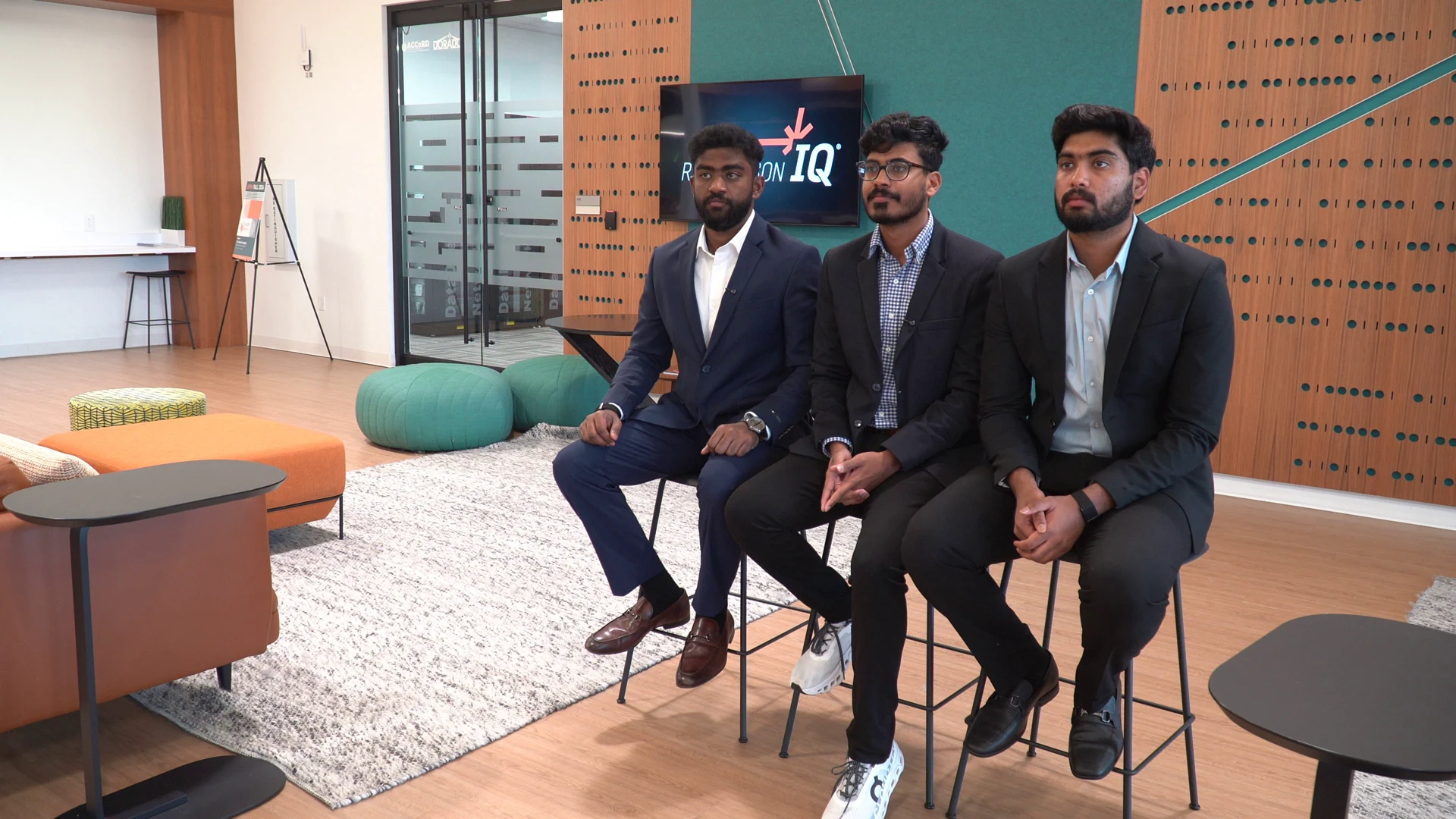 WFAA · Iris Mobility
Relevant context
Independent documentary record of an India-to-Richardson pathway
WFAA documents the Iris Mobility journey, Richardson operating context and City relationship. It does not independently attribute the landing to Startup Runway.
Open WFAA reportReference library
Original sources for the route.
5 references selected for the market question.
Reference library
India → United States sources
Open the supporting public material whenever it is useful to the decision.
Iris Mobility in Richardson
+
WFAA follows Iris Mobility’s Richardson setting and founder journey.
Watch Iris Mobility in RichardsonCity of Richardson India mission
+
The City record covers a City–India partnership and five-city mission.
Open City partnership record2024-06-09 · Indian manufacturing and technology market-entry pathway
+
Public coverage related to the India–U.S. corridor.
Open 2024-06-09 · Indian manufacturing and technology market-entry pathway2024-07-20 · APIS and Startup Runway market-access partnership
+
Public coverage related to the India–U.S. corridor.
Read Times of India report2026-05-14 · Iris Mobility deploying in Richardson
+
Public coverage related to the India–U.S. corridor.
Open 2026-05-14 · Iris Mobility deploying in RichardsonSource notes
Use the route to frame the decision. Carry company plans into a private conversation.
About this route+
This guide brings together India–United States market context and original sources. Company-specific plans stay private.
Explore global corridors
Market-specific guides, public source registers, and a defined next step.
Private next step
Discuss Expansion.
Bring the destination-market objective, accountable decision owner, sector context, and key considerations. The private GTM brief protects the detail this public market page cannot publish.
Tell us what you are trying to accomplish. We review every qualified inquiry directly and typically respond within two business days.
Discuss Expansion